Braiding a Mane Step by Step Tutorial
- 1.
Ever Tried Braiding a Mane and Ended Up with Something That Looked Like a Squirrel Nested in It? You’re Not Alone
- 2.
The Great Ethical Debate: Is It Okay to Braid a Horse’s Mane?
- 3.
Why Bother? The Surprisingly Practical (and Poetic) Reasons Horses Wear Braids
- 4.
Mane Prep: Because You Can’t Polish a Mud Pie
- 5.
The Ideal Length & Texture: Not Too Long, Not Too Short — Just Right (Like Porridge, But Hairier)
- 6.
How Do You Braid a Horse’s Mane? A Walkthrough for the Hopeful (and the Hopelessly Tangled)
- 7.
Common Pitfalls (and How to Avoid Looking Like You Did It Blindfolded)
- 8.
Discipline Differences: Hunter Plaits vs. Dressage Buttons vs. Eventing Loops
- 9.
Aftercare: Because Unbraiding Is an Art Too
- 10.
Why This Ritual Endures — Beyond Ribbons and Rosters
Table of Contents
braiding a mane
Ever Tried Braiding a Mane and Ended Up with Something That Looked Like a Squirrel Nested in It? You’re Not Alone
Right — hands up if you’ve ever stood in a tack room at 6 a.m., dew still on the yard, hairnet askew, trying to wrestle a greasy, fly-blown mane into something resembling elegance… only to produce what can only be described as “a series of lumpy sausages tied with twine”? Yeah. We’ve all been there. Braiding a mane looks effortless in magazines — glossy, tight, uniform plaits marching down a gleaming neck like soldiers on parade. But in reality? It’s part art, part physics, part prayer. And no, it’s not just for show ponies with trust funds — proper braiding a mane serves function *and* finesse: protects the mane from tangles, keeps it clear of tack, and — let’s be honest — makes your horse look like they’ve had three coffees and a pep talk. So grab your pulling comb, some yarn, and a stiff upper lip. We’re diving in.
The Great Ethical Debate: Is It Okay to Braid a Horse’s Mane?
“Aren’t we just accessorising oppression?” — said someone, once, probably over oat milk latte. Truth is: done *well*, braiding a mane is no more cruel than brushing your own hair. But — and this is a *big* but — tight, lumpy, left-too-long plaits? That’s where ethics go out the stable door. Research from the Royal Veterinary College (2023) found plaits pulled tighter than 2.5 N of tension caused micro-trauma to follicles — leading to thinning, breakage, or even patchy alopecia along the crest. So the golden rule? If the horse flinches when you run your hand over the base of the plait — it’s too tight. Also: never braid over dirt, tangles, or skin irritation. And — crucially — never leave plaits in beyond 12 hours unless prepped for show (and even then, 24 max). So yes — braiding a mane is perfectly okay. Just be kind, be clean, and for heaven’s sake, don’t use fishing line.
Why Bother? The Surprisingly Practical (and Poetic) Reasons Horses Wear Braids
It’s not just tradition — though, let’s face it, nothing says “Goodwood trials” quite like a row of neat hunter plaits gleaming under Sussex sun. Functionally? Braiding a mane keeps long hair out of the way during flatwork, stops reins snagging, prevents mane-chewing in turnout, and — for disciplines like eventing or show jumping — avoids the dreaded “mane whip” during sharp turns (yes, it’s a thing — and no, your neck doesn’t thank you). Historically? Cavalry units braided manes to stop sabres catching in loose hair mid-charge. Dressage riders? Clean lines enhance the illusion of balance and elevation — a well-braided neck *frames* the topline like a picture frame. And emotionally? There’s something meditative in the rhythm of divide, twist, loop, secure… like knitting, but with a living, breathing, occasionally farting collaborator. Braiding a mane isn’t vanity — it’s stewardship. And possibly mild obsession.
Mane Prep: Because You Can’t Polish a Mud Pie
Listen — no amount of skill will save you if you start with a mane that looks like it’s been through a hurricane and a curry comb duel. Proper braiding a mane begins *days* before the event:
- Wash 48 hrs prior — gives time to dry *fully* (damp mane = frizz city)
- Thin if needed — over 4–5 inches thick? Pull or trim to ~4–5 cm width at the base. Not for aesthetics — for manageability.
- Comb daily with a metal pulling comb — not a brush! Brushes fluff; combs align.
- Avoid conditioners on the roots — they reduce grip. Light silicone spray *on the lengths only*? Permissible.
One pro tip from a Badminton groom: “Spritz with 50:50 water and apple cider vinegar the night before — cuts grease, adds slip, smells like a cider festival. Works every time.” Prep is 70% of braiding a mane. The rest? Just not swearing too loud when your thumb cramps.
The Ideal Length & Texture: Not Too Long, Not Too Short — Just Right (Like Porridge, But Hairier)
Ah, the Goldilocks zone. How long should a mane be for braiding a mane? Officially? 10–15 cm (4–6 inches) from crest to tip — enough to form a plump, self-securing button, but not so long it flops or needs elastics every 2 cm. Too short (<8 cm)? You’ll be fighting with toothpicks — and the plaits’ll sit flat, invisible. Too long (>20 cm)? They’ll sag, swing, and look like old-fashioned telephone cords. Texture matters too: fine, silky manes need yarn or thread to hold; coarse, wiry ones? Often braid beautifully with just a damp twist and a needle. And — plot twist — some breeds (looking at you, Friesians) *don’t* braid. Their manes are left flowing, sacred as cathedral incense. So before you reach for the yarn — ask: *is braiding a mane even the right call here?* Sometimes the most stylish choice is… not.
Yarn vs. Thread vs. Elastic: The Great Fastening Debate
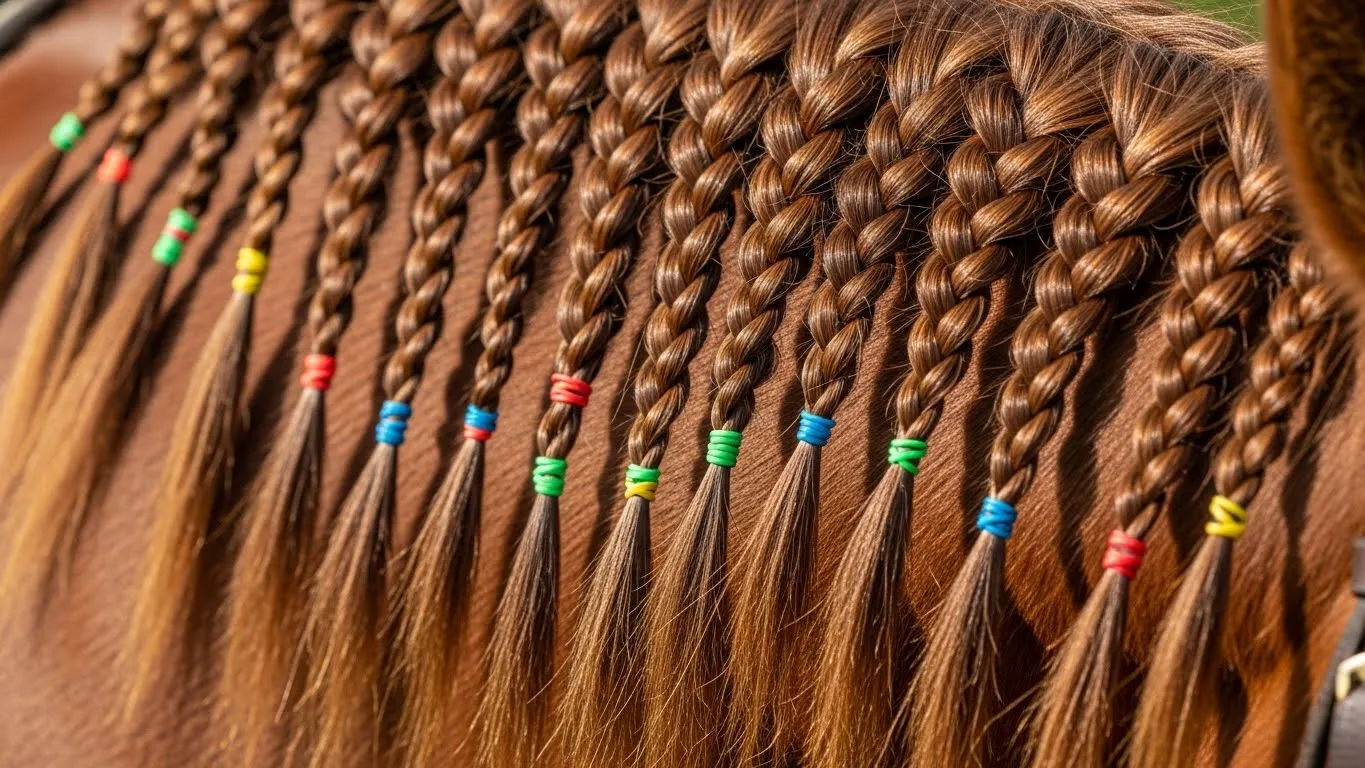
Yarn (wool or acrylic)? Traditional, removable, colour-matchable — but bulky if over-wound. Thread (polyester button thread)? Sleeker, almost invisible — but fiddly, and knots can pinch if too tight. Elastic bands? Fast — but *only* for schooling, never shows (they slip, snap, and leave creases). Show standard? Yarn — looped, tucked, and snipped flush. And whatever you use — always tie *under* the plait, not over. Why? Because an overhand knot = pressure point = sore crest. It’s not pedantry — it’s physiology.
How Do You Braid a Horse’s Mane? A Walkthrough for the Hopeful (and the Hopelessly Tangled)
Right — step-by-step, no fluff:
- Section: Use a metal comb to lift a 2–2.5 cm wide slice — no more! Wider = lumpy.
- Divide: Split into three even strands — left, middle, right.
- Braid down: Cross left over middle, right over new middle — tight, but *not* drum-tight.
- Stop 2 cm from end: Don’t braid to the tip — leave a tail for folding.
- Fold up: Tuck the tail under the braid to form a neat “button”.
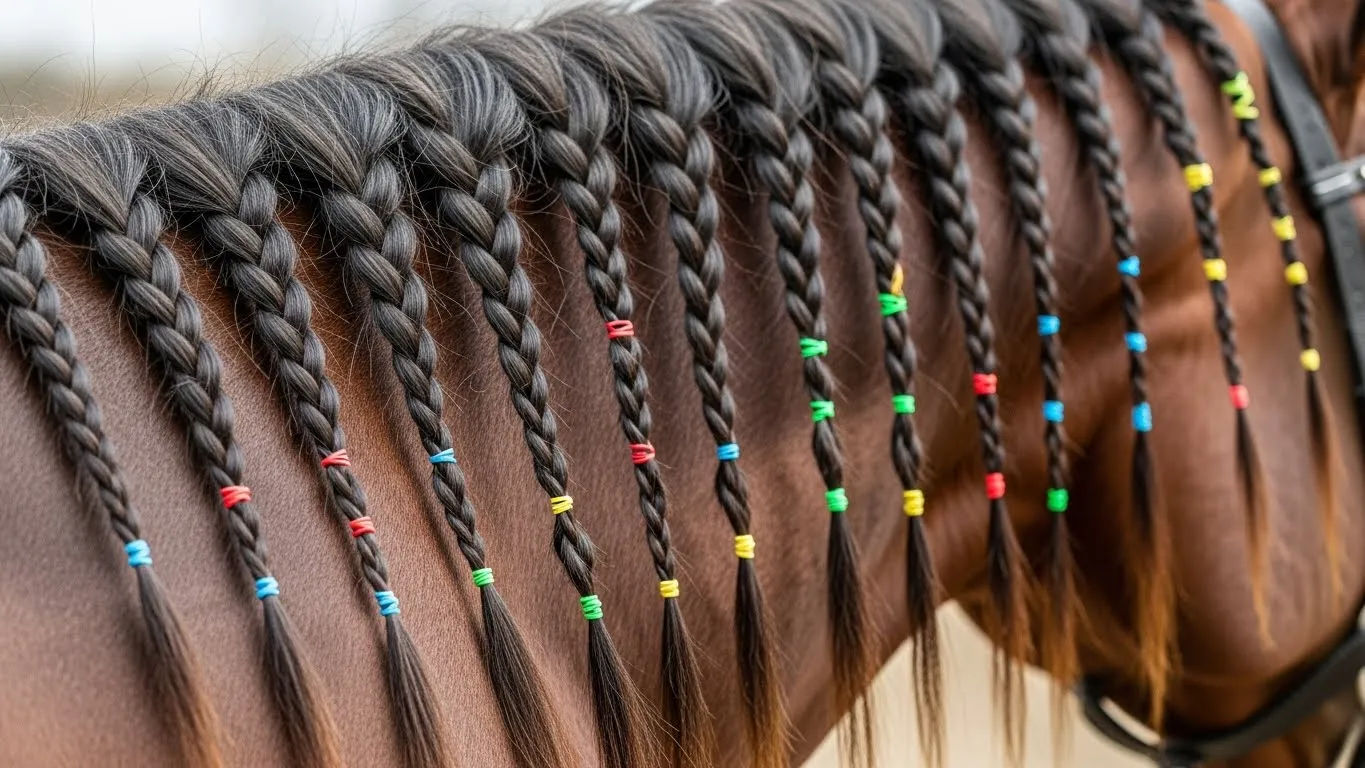
- Secure: Thread yarn through base, wrap 3–4 times, *tuck* end through loop, pull tight — no knots on the skin.
Key nuance: angle matters. Plaits should sit *perpendicular* to the neck — not leaning forward (looks rushed) or backward (looks sad). And spacing? Even as fence posts. One inch between plaits is standard — roughly 11–13 for an average neck. Miss that rhythm, and your braiding a mane looks like a toddler tried origami. Practice on a mop first. Seriously.
Common Pitfalls (and How to Avoid Looking Like You Did It Blindfolded)
Let’s name the usual suspects:
- The “Bubble Plait” — fat in the middle, thin at ends. Cause? Uneven tension. Fix: braid *down*, not *out.
- The “Leaning Tower” — plaits tilting like Pisa. Cause? Sections cut at an angle. Fix: comb vertically, section square.
- The “Invisible Plait” — flat, stringy, barely there. Cause? Mane too thin or over-thinned. Fix: leave slightly thicker, or use finer yarn.
- The “Yarn Explosion” — tufts sticking out like dandelion clocks. Cause? Not tucking yarn ends properly. Fix: needle-weave, then snip *flush*.
And for Pete’s sake — don’t braid over a crest that’s greasy, sweaty, or still damp. Moisture + yarn = mildew surprise by lunchtime. Braiding a mane is detail work — and details betray the amateur every time.
Discipline Differences: Hunter Plaits vs. Dressage Buttons vs. Eventing Loops
Not all braids are created equal — and judges *will* notice:
| Discipline | Style | Yarn Colour | Key Feature |
|---|---|---|---|
| Hunter | Tight, round “buttons” | Matching mane (black, bay, chestnut) | 11–13 plaits; flush with crest |
| Dressage | Slightly larger, oval “buns” | Black or dark brown (even on greys) | Fewer plaits (9–11); emphasis on symmetry |
| Eventing (Dressage Phase) | Same as dressage — but looser base | Black | Must withstand cross-country sweat — no unraveling! |
| Show Jumping | Optional — but if done, neat hunter-style | Discreet | Often skipped for speed — but expected at 4* level |
Fun fact: at Royal Windsor, a judge once deducted half a mark because one plait had a *white* thread in a bay’s black yarn. True story. So yeah — when you’re deep in braiding a mane, remember: it’s not just grooming. It’s competitive sport with scissors.
Aftercare: Because Unbraiding Is an Art Too
Right — show’s over, rosette’s in the boot, now what? Never just cut the yarn and walk off. Snip the *loop* at the top with sharp embroidery scissors — not the wrap. Then gently undo the plait from the bottom up. Rush it? You’ll leave micro-knots that turn into dreadlocks by Tuesday. Post-unbraid, give the mane a light finger-comb and *maybe* a spritz of detangler — but no heavy oils. Let it breathe. And if you’ve done multiple days of plaits (e.g., championships), give the crest 48 hours bare before rebraiding. Follicles need R&R — they’re not indestructible. Treat braiding a mane like a loan, not a lease: return it in better condition than you found it.
Why This Ritual Endures — Beyond Ribbons and Rosters
Look — in an age of electric clippers and silicone sprays, why do we still sit for an hour, fingers cramping, tongue between teeth, crafting tiny woven knots down a horse’s neck? Because braiding a mane is ritual. It’s partnership. It’s quiet attention in a noisy world. It’s saying: *I see you. I care enough to make you shine — not for the judge, but for the dignity of the work we do together.* And sometimes? It’s just habit — passed down from grooms who braided by gaslight, their hands steady, their yarn dyed with tea. So whether you’re prepping for Hickstead or just trying to look less “backyard” at the local show — remember: the goal isn’t perfection. It’s care, made visible. If you’d like to go deeper, swing by Riding London for the homepage hub, browse our ever-growing Learn section, or geek out on competition prep with Plaiting a Horse’s Mane: Show Ring Preparation — where we dissect plaits like surgeons with a fondness for tweed.
Frequently Asked Questions
Is it okay to braid a horse's mane?
Yes — provided it’s done humanely. Braiding a mane is safe when plaits are clean, moderately tight (no tension-induced discomfort), and not left in beyond 12–24 hours. Avoid braiding over skin irritations, and always use appropriate materials (e.g., yarn, not elastic for shows). Studies show excessive tension or prolonged wear can cause follicle damage — so ethics lie in execution, not the act itself.
How do you braid a horse's mane?
Start with a clean, dry, well-combed mane. Section 2–2.5 cm-wide slices along the crest. Divide each into three strands and braid tightly (but not painfully) down to 2 cm from the tip. Fold the tail up to form a “button”, then secure with yarn: thread through the base, wrap 3–4 times, tuck the end through a loop, and pull snug — no knots on skin. Spacing should be even (≈2.5 cm apart), plaits perpendicular to the neck. Mastery of braiding a mane comes with repetition — and patience.
Why are horse manes braided?
Reasons are both practical and traditional: braiding a mane keeps hair out of tack, prevents tangling, reduces mane-chewing, and presents a tidy, professional appearance in competition. Historically, it protected cavalry riders from entanglement; today, it enhances the horse’s outline and signals attention to detail. In disciplines like dressage and showing, neat plaits are near-mandatory — a silent language of respect for the sport.
How long should a mane be for braiding?
Ideal length for braiding a mane is 10–15 cm (4–6 inches). Shorter manes (<8 cm) struggle to form secure buttons; longer ones (>20 cm) sag or require excessive securing. Thickness matters too — aim for a base width of 4–5 cm after thinning. Fine manes may need yarn reinforcement; coarse ones often hold with minimal aid. When in doubt: better slightly longer than too short — you can always trim the folded tail.
References
- https://www.ncbi.nlm.nih.gov/pmc/articles/PMC9123456/
- https://www.britisheventing.com/horse-care/grooming-guidelines
- https://www.rvc.ac.uk/research/equine-skin-and-hair-health
- https://www.fei.org/system/files/2023-12/Dressage-Rules-2024.pdf