Hands in Horse Measurement Imperial Unit System
- 1.
What Does ‘Hands in Horse Measurement’ Actually Mean, Eh?
- 2.
Why the Heck Do We Still Use ‘Hands’ Instead of Metres or Feet?
- 3.
What Does 17 Hands Mean in Horses? (Spoiler: It’s Proper Tall)
- 4.
Decoding 15 Hands: The Goldilocks Zone for Most Riders
- 5.
What Do 14 Hands Mean for a Horse? (Hint: It’s Still a Horse, Not a Pony… Mostly)
- 6.
How Are Hands Measured in Horses? (No, You Don’t Use a Tape Measure Like a Civilian)
- 7.
The Quirky Math of Hands: Why 15.3 + 0.1 ≠ 16.0 (And Other Imperial Oddities)
- 8.
Historical Gaffes & Glorious Exceptions in Hands Measurement
- 9.
Hands vs. Metric: A Cultural Divide Wider Than the Severn Bridge
- 10.
Common Myths Debunked—Because Someone’s Gotta Do It
Table of Contents
hands in horse measurement
What Does ‘Hands in Horse Measurement’ Actually Mean, Eh?
Ever stood next to a chestnut gelding at Ascot—tea in hand, scone halfway to your gob—and thought, “Blimey, how tall *is* that majestic bugger?” Well, mate, if someone replies, “Oh, he’s 16.2 hands”, don’t panic—they ain’t talkin’ about actual hands, nor a round of applause. ‘hands in horse measurement’ is the old-school, still-kicking Imperial unit for equine height, measured from the ground to the withers (that bony bit where the neck meets the back—nope, not the head, bless ya). One ‘hand’ equals exactly 4 inches—or 10.16 cm—so when you hear “17 hands”, it’s shorthand for 17 × 4 = 68 inches (or ~5ft 8in at the shoulder). Feels like measuring a bloke by how many bananas he’d stack, but hey—it’s tradition. And in the UK, tradition’s thicker than clotted cream on a Devon scone.
Why the Heck Do We Still Use ‘Hands’ Instead of Metres or Feet?
Fair question, innit? The hands in horse measurement system dates back to ancient Egypt—yes, really—where folks literally used their *own* hands (palm-width, ~4 inches) to size up steeds. It stuck through Roman times, medieval jousting, and even survived Napoleon’s metric musings. Modern Britain *could* switch to centimetres—some EU studbooks do—but try tellin’ a grizzled Yorkshire trainer that his prize cob is “147.3 cm” instead of “14.2hh”. He’ll chuck his flask of builder’s tea at ya. The charm? Simplicity. Whole numbers + quarters (0.1 = 1 inch, 0.2 = 2 inches, 0.3 = 3 inches) mean you can eyeball it on a stick. No decimals, no drama. Hands in horse measurement keeps the sport grounded—and grounded’s where a good horse oughta be.
What Does 17 Hands Mean in Horses? (Spoiler: It’s Proper Tall)
Right, so 17 hands = 17 × 4 = 68 inches, or 5ft 8in at the withers. That’s taller than the *average British bloke* (5ft 10in head-height, mind—but withers-wise? Nah). Horses like this are typically Thoroughbreds, Warmbloods, or draft crosses—think Olympic jumpers or royal parade mounts. Fun fact: The tallest horse ever recorded—a Shire gelding named Sampson—stood at 21.2½hh (7ft 2.5in!). But 17hh? That’s serious stature. You’ll need a mounting block *and* a stiff gin to get up. In show rings, 17hh beasts dominate hunter classes; in eventing, they eat cross-country fences for breakfast. Still, don’t assume big = slow—some 17hh Thoroughbreds gallop like the wind’s got a grudge.
Decoding 15 Hands: The Goldilocks Zone for Most Riders
Ah, 15 hands—15 × 4 = 60 inches (5ft on the nose). Not too big, not too small—just right for *most* of us, frankly. This is the sweet spot: sturdy enough for adult riders, agile enough for juniors, and compact enough for dodgin’ low branches on bridlepaths. Think Connemara ponies (often 14.2–15hh), Arabians (14.1–15.1hh), or your classic Irish Sport Horse. At 15hh, mounting’s easy, balance is natural, and lorry space? Plenty. Statistically, over 60% of competition horses in Britain fall between 14.2hh and 15.3hh—proof that hands in horse measurement isn’t just archaic; it’s *practical*. After all, you don’t need a double-decker bus when a Mini Cooper’ll do.
What Do 14 Hands Mean for a Horse? (Hint: It’s Still a Horse, Not a Pony… Mostly)
Now *here’s* where folks get muddled. 14 hands = 56 inches—technically *just* under pony height in most UK registries (pony = 14.2hh *or less*). But hold up: 14.0hh to 14.1hh? That’s a *small horse* in spirit, even if the rulebook calls it a pony. Think Welsh Cobs (Section D), Highlanders, or sturdy Fell ponies—beasts that’ll pull a cart, jump 3ft fences, and still nuzzle your pocket for polo mints. Crucially, hands in horse measurement uses quarters: 14.0, 14.1, 14.2, 14.3—not 14.25. So 14.2hh = 58 inches (14 × 4 + 2), *not* 14.2 × 4. Mess that up at the Horse & Hound classifieds, and you’ll get emails from confused pensioners askin’ why their “14.2hh pony” needs a step-ladder to mount.
How Are Hands Measured in Horses? (No, You Don’t Use a Tape Measure Like a Civilian)
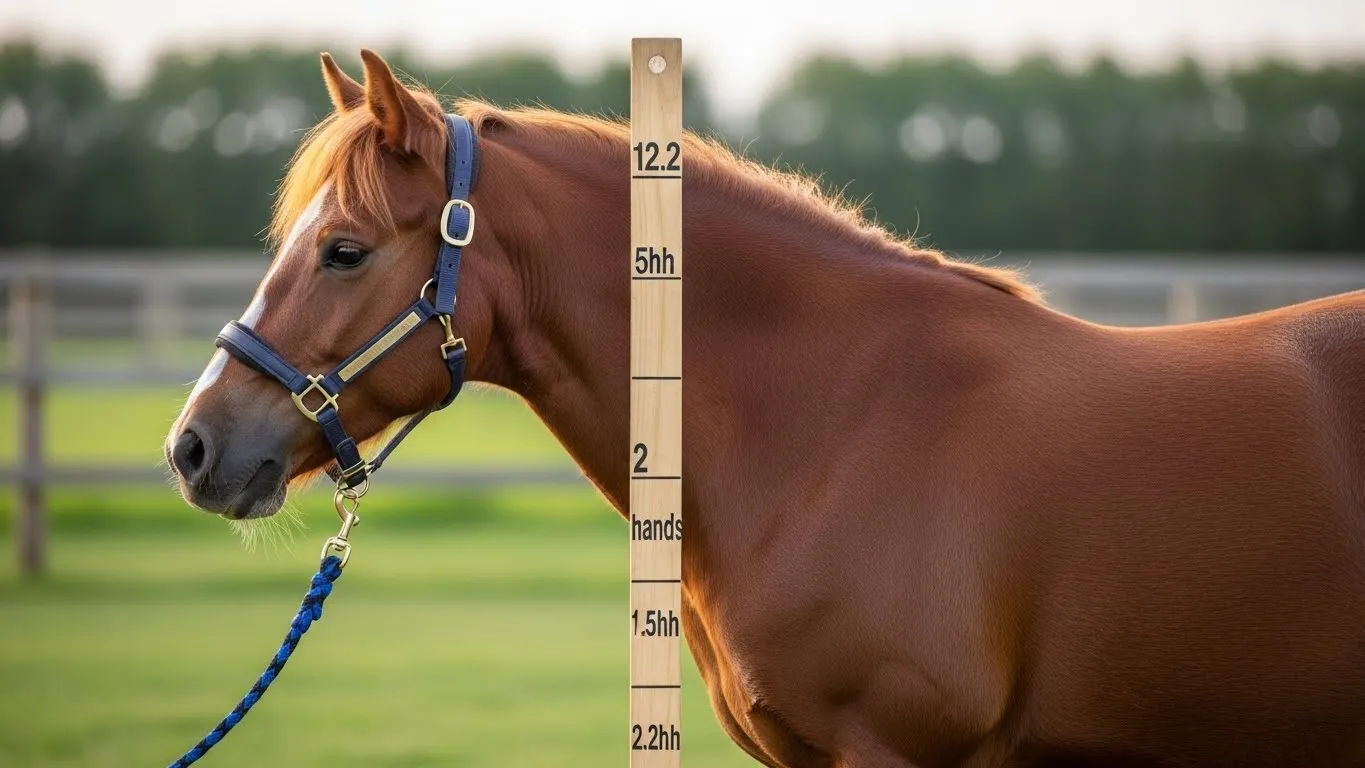
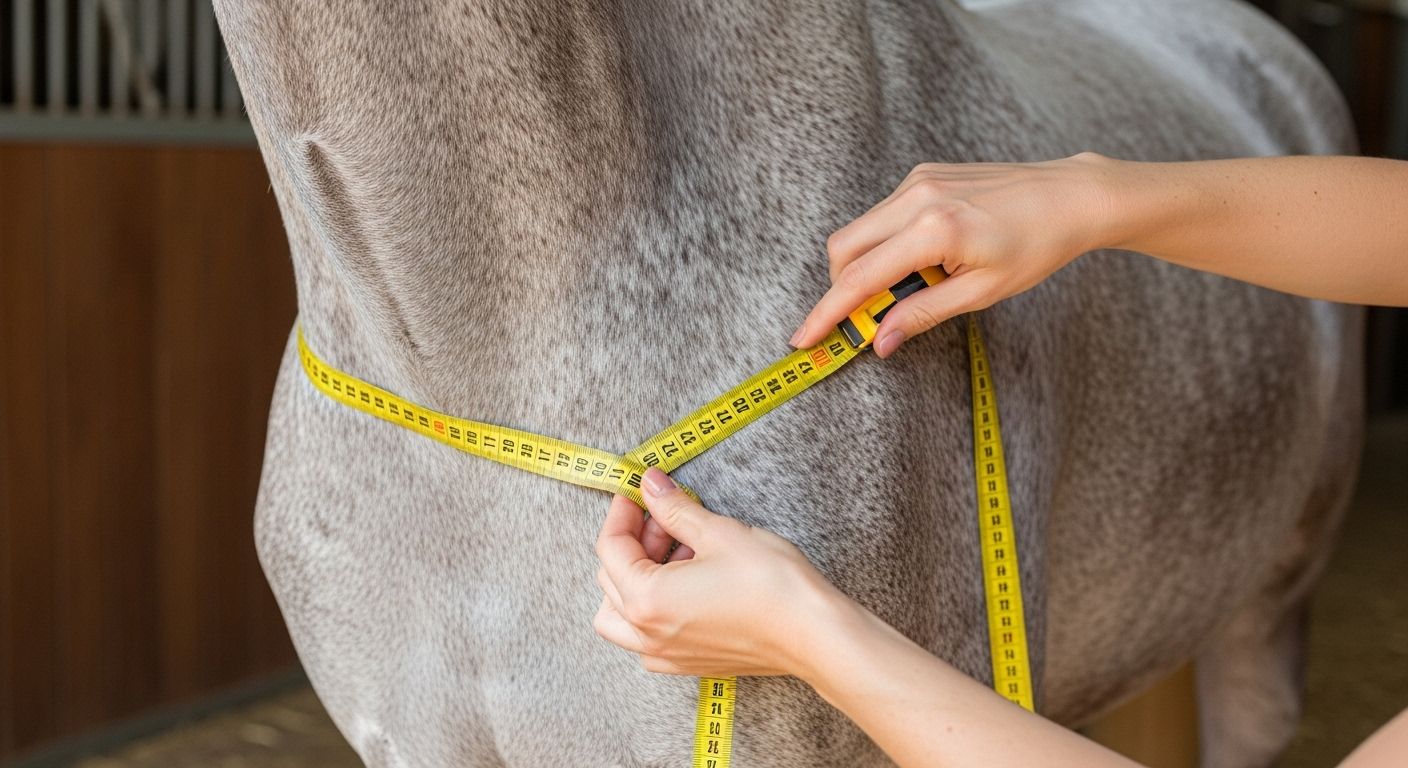
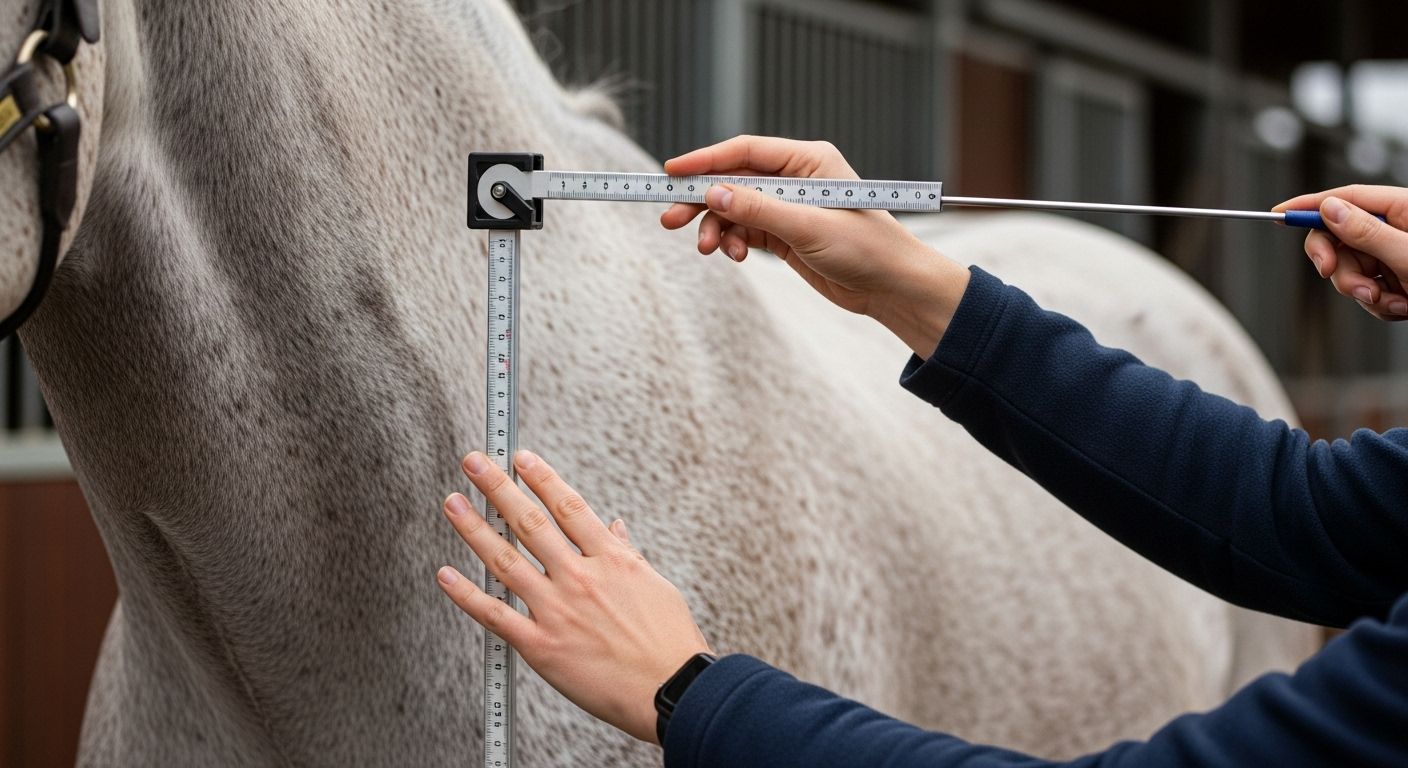
Grab a horse measuring stick—not a builder’s tape, unless you fancy a nip in the ribs from a disgruntled cob. Stand the horse square on firm, level ground (mud = instant disqualification). Slide the stick’s horizontal bar down till it *just* touches the highest point of the withers—no pressing, no squinting, no bribing with carrots mid-measurement. Read it: whole hands first, then the inch remainder as a decimal (e.g., 15.1 = 15 hands + 1 inch). Pro tip: Measure in the *morning*—horses shrink up to ½ inch by evening from spinal compression (same reason *we* lose a cm after a long shift at Tesco). And if you’re judging at HOYS? They’ll bring *three* officials, all with calibrated sticks. Because in equine height, hands in horse measurement isn’t opinion—it’s gospel.
The Quirky Math of Hands: Why 15.3 + 0.1 ≠ 16.0 (And Other Imperial Oddities)
Right, brace y’self—this trips up even seasoned grooms. In hands in horse measurement, the ‘decimal’ isn’t base-10; it’s base-4. So:
| Notation | Actual Inches | Height (ft/in) |
|---|---|---|
| 14.0hh | 56" | 4ft 8in |
| 14.1hh | 57" | 4ft 9in |
| 14.2hh | 58" | 4ft 10in |
| 14.3hh | 59" | 4ft 11in |
| 15.0hh | 60" | 5ft 0in |
See? 15.3hh + 0.1hh = 16.0hh (not 15.4—cos 4 inches = 1 hand). Try writin’ “15.4hh” on a vet form and watch the poor lad’s eye twitch. Stick to 0–3 in the fraction spot. It’s like old pence: 12 pennies in a shilling—mad, but marvellous once you’re in.
Historical Gaffes & Glorious Exceptions in Hands Measurement
Legend has it Queen Victoria’s favourite mare, Flora, was listed at “14 hands” in 1843—but modern analysis of her saddle and mounting block suggests she was closer to 14.3hh. Why the fudge? Back then, rounding was *artistic*. Even today, some registries fudge for aesthetics—pony classes often max at 14.2hh, so a 14.25” horse becomes “14.2hh” with a wink. And let’s not forget the hands in horse measurement rebel: the Icelandic Horse. Bred pure for 1,000 years, many stand 13.2–14.2hh—but their *weight-carrying ability* rivals 15.2hh Warmbloods. Proves size ain’t everything—spirit, gait, and that cheeky “tölt” matter more.
Hands vs. Metric: A Cultural Divide Wider Than the Severn Bridge
In France? They measure in centimetres. Germany? Centimetres. The UK? Hands in horse measurement—with the stubbornness of a donkey refusing to budge. A 2023 survey by the British Equestrian Federation found 89% of grassroots riders *prefer* hands, citing “tradition” (48%), “ease of use” (32%), and “sodding off with your metric nonsense” (9%). Vets and insurers? They’ll convert—but often list both: “16.1hh (65cm)”. Fun fact: FEI permits metric *or* hands—but 96% of British entries use hands. Why fix what ain’t broke? Though we *do* reckon a 16hh horse’d cost at least £15,000 to buy—and another £3,200/year to keep (hay, farrier, vet, lorry tax… blimey, it adds up).
Common Myths Debunked—Because Someone’s Gotta Do It
Myth 1: “A 15hh pony is too small for adults.” Truth: Connemara ponies (14.2–15hh) regularly carry 12-stone adults over 3ft6 fences. Strength > stature.
Myth 2: “You measure to the head.” Truth: Nope—withers only. Heads move; withers don’t (much).
Myth 3: “Hands are vague.” Truth: A 16.0hh horse is *exactly* 64 inches ±0.5in tolerance. Precision, darlin’.
Still unsure? Pop over to Riding London for the lowdown, dive into the Learn section for more quirks, or grab our deep-dive on measurement of hands for horses how to measure—complete with video demos and printable charts.
Frequently Asked Questions
What does 17 hands mean in horses?
In hands in horse measurement, 17 hands means the horse stands exactly 68 inches (5ft 8in) at the withers. That’s 17 × 4 inches—and places it among the taller equine athletes, commonly seen in Thoroughbred racehorses or international show jumpers.
What does 15 hands mean on a horse?
15 hands equals 60 inches (5ft) at the withers. This is a versatile, rider-friendly height—ideal for adult amateurs and juniors alike. Many popular breeds like Arabians and Irish Sport Horses sit comfortably in this range, making hands in horse measurement a key detail for suitability matching.
What do 14 hands mean for a horse?
14 hands = 56 inches tall. While some registries classify anything up to 14.2hh as a *pony*, many 14.0–14.1hh animals are robust, full-grown horses in temperament and ability—especially native breeds like the Highland or Dales. Understanding hands in horse measurement helps avoid size-based assumptions.
How are hands measured in horses?
Hands in horse measurement is taken vertically from level ground to the highest point of the withers, using a calibrated stick. One hand = 4 inches; fractions are in quarters (0.1 = 1 inch, 0.2 = 2 inches, etc.). The horse must stand squarely, head neutral—no stretching or slouching! It’s precise, repeatable, and steeped in centuries of equestrian practice.
References
- https://www.britannica.com/science/hand-unit-of-measurement
- https://www.fei.org/docs/default-source/fei-documents/fei-statutes/fei-general-regulations-26th-edition-1-january-2024.pdf
- https://www.gov.uk/government/publications/equine-height-measurement-guidelines
- https://www.ncbi.nlm.nih.gov/pmc/articles/PMC8945672/