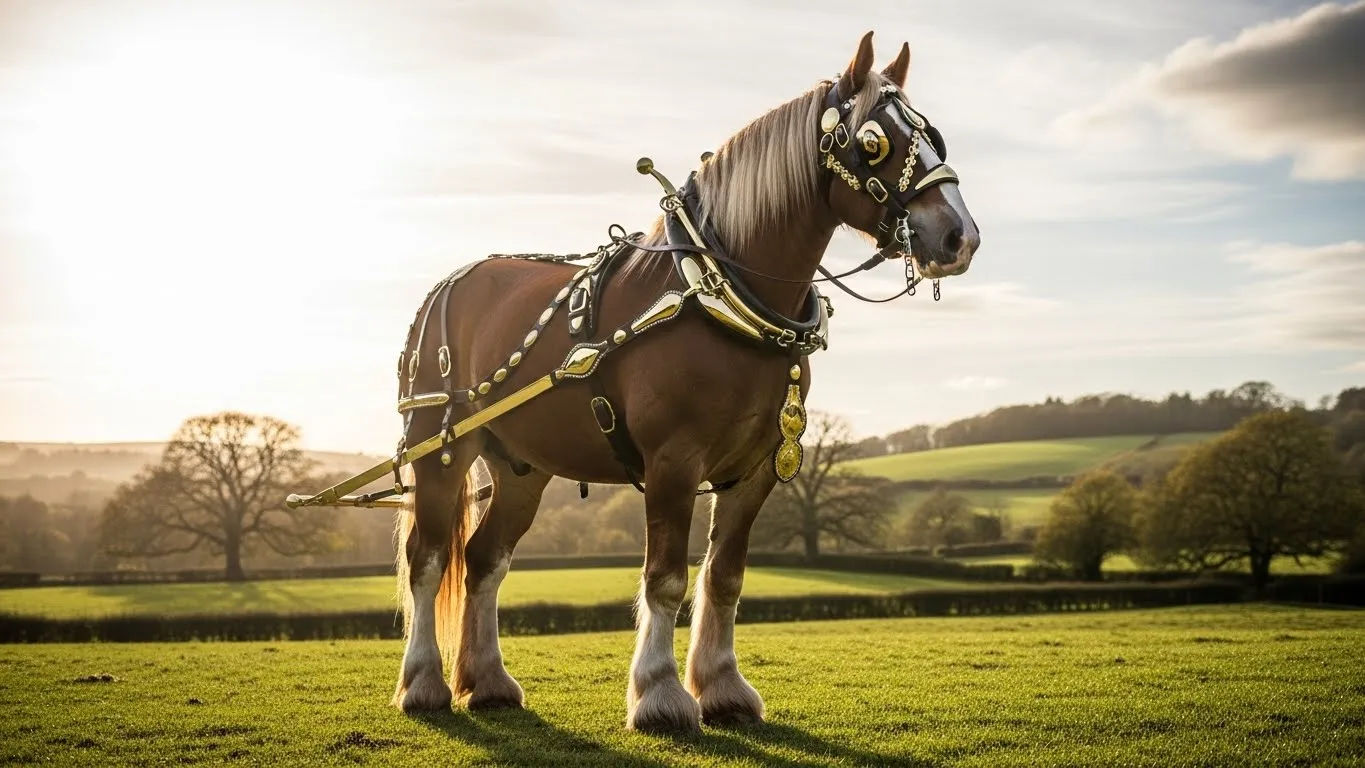
Diagram Horse Hoof Simplified Educational View
- 1.
What is the anatomy of the horse hoof? Let’s crack open the box like a proper cuppa spill
- 2.
How should a horse's hoof look? Picture-perfect isn’t just for Instagram influencers
- 3.
What is the middle part of a horse's hoof called? Meet the unsung hero: the frog
- 4.
How do horse hooves work? It’s biomechanics with a Yorkshire accent
- 5.
The hoof wall: tougher than a Glasgow bouncer and twice as reliable
- 6.
The digital cushion: padding with purpose, like memory foam in your nan’s slippers
- 7.
The laminae: nature’s Velcro—strong, interlocking, and *very* easy to mess up
- 8.
Blood flow & the hoof pump: your horse’s circulatory secret weapon
- 9.
Common hoof ailments—because even thoroughbreds get the sniffles
- 10.
Where to go next? Dive deeper into the world of equine wonders
Table of Contents
diagram horse hoof
What is the anatomy of the horse hoof? Let’s crack open the box like a proper cuppa spill
Ever looked at a horse’s foot and thought, “Blimey, that’s just a fancy toenail, innit?” Well, mate—you’ve been misled smoother than a dodgy used-car salesman in Essex. The anatomy of the horse hoof is a proper engineering marvel, innit—like a well-brewed stout: complex, layered, and built to last. At its core, the hoof’s a keratin fortress (yep, same stuff as your nails), but layered like a posh onion: periople up top, then the hoof wall—divvied into toe, quarters, and heels—then underneath? That’s where the *real* jazz kicks in: the sole, frog, bars, white line, and coffin bone all snug in there like pensioners at a bingo hall. Every bit of the diagram horse hoof maps how pressure, shock, and circulation dance in tight harmony. No wonder Farriers spend years just mastering this bit—there’s more nuance here than in a Radio 4 panel debate on the weather.
How should a horse's hoof look? Picture-perfect isn’t just for Instagram influencers
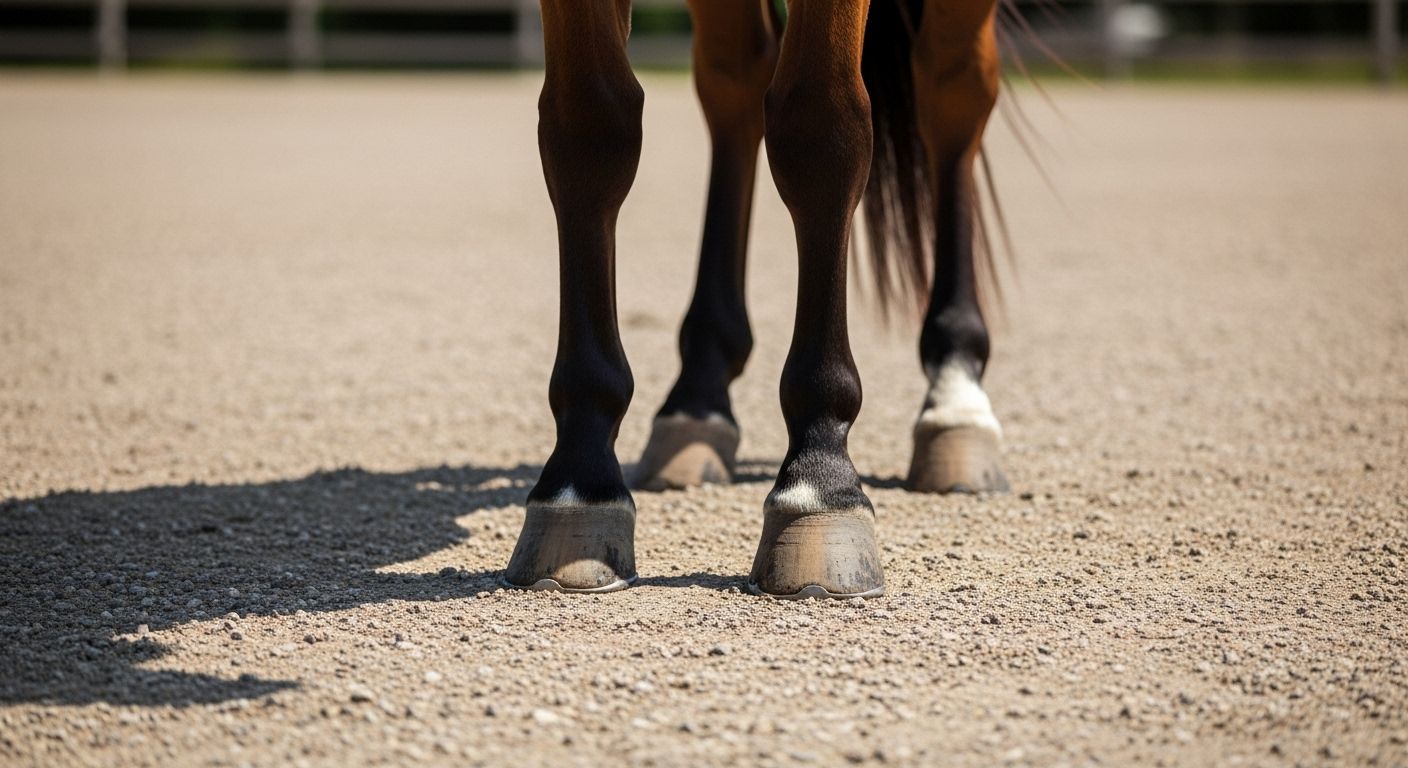
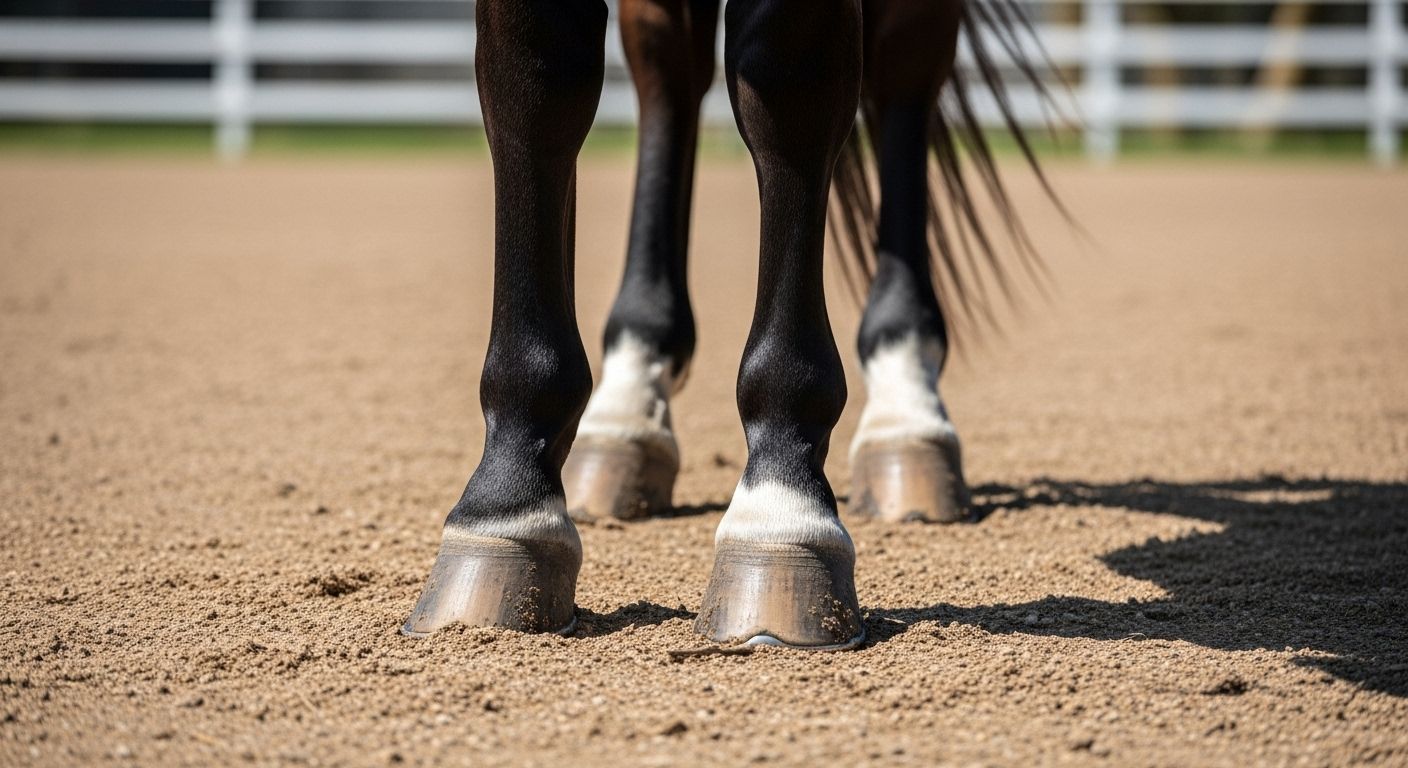
A healthy hoof’s got symmetry sharper than a tailor’s chalk line on Savile Row. From the front? Straight down the middle—no wonky angles, no flares like a bell-bottom at a ’73 disco. Side-on? The hoof-pastern axis should line up like trains on parallel tracks: smooth, balanced, nary a wobble. Sole? Concave—not flat like a cheap crisp—and the frog? Plump, rubbery, and split down the middle like a proper Sunday roast joint. How should a horse's hoof look? Think: resilient, clean, and self-trimming *in theory*—though in reality, most need a farrier’s tidy-up every 6–8 weeks (roughly £45–£75 per trim, mind you). Miss that window? You’ll see cracks, thrush, or worse—underrun heels that’ll have your nag walking like he’s stepped on a Lego brick. Keep an eye on that diagram horse hoof, luv—it’s your cheat sheet to spotting dodgy hooves before they turn into full-blown dramas.
What is the middle part of a horse's hoof called? Meet the unsung hero: the frog
Right, pop quiz: what’s the squishy, V-shaped bit smack-bang in the middle of the hoof? Nope—not the “sponge,” “gusset,” or “hoof jelly” (though we *have* heard all three down the paddock). It’s the frog—and no, it doesn’t croak (we checked). This fella’s vital: it’s a shock absorber, blood pump, traction aid, and hygiene enforcer *all in one*. When the hoof hits the ground, the frog compresses, squishing blood back up the leg—like giving the circulatory system a wee nudge with a teaspoon. What is the middle part of a horse's hoof called? The frog, mate—and in any proper diagram horse hoof, it’s usually shaded a darker red or pink to stand out, bless it. Keep it healthy, and your horse’s legs’ll thank you like a pensioner getting a winter fuel payment.
How do horse hooves work? It’s biomechanics with a Yorkshire accent
So—how do horse hooves work? Picture this: the hoof hits the ground. *Thwock.* Instantly, the wall flexes *outward*, the sole dips *inward*, and the frog squishes *upward*. That’s the hoof capsule doing its expansion-and-recoil jig—like a well-oiled accordion played by a pub legend. Inside? The coffin bone (P3), navicular bone, and deep digital flexor tendon all shift millimetres—tiny, yes, but crucial. Blood gets milked up the limb (yes, *milked*—it’s called the “hoof pump mechanism”), and impact energy dissipates so the hocks don’t rattle like a biscuit tin in a van. The diagram horse hoof doesn’t just label bits—it shows *function*. Think of it as IKEA instructions, but for evolution: no Allen key needed, just 55 million years of fine-tuning.
The hoof wall: tougher than a Glasgow bouncer and twice as reliable
Ah, the hoof wall—nature’s carbon-fibre composite, laid down in tubules like terraced houses along a hillside. It grows ~1 cm/month (faster in summer, slower in winter—just like your motivation to mow the lawn). It’s split into zones: the *toe* (front line), *quarters* (left and right flanks), and *heels* (the rear guard). Cracks? Flares? Seedy toe? All signs somethin’s off—nutrition, trim, or workload. In a diagram horse hoof, the wall’s usually the bold outer rim, thick as a pub landlord’s forearm and just as dependable when it’s sound. Remember: no wall, no ride. It’s that simple, like tea without milk—technically possible, but *why*?
The digital cushion: padding with purpose, like memory foam in your nan’s slippers
Tucked up above the frog—soft, fibro-fatty, and criminally underrated—is the digital cushion. Think of it as the hoof’s airbag. When the foot lands, this cushion spreads, flattens, and pushes the heels *outward*, helping the whole capsule expand. Foals? It’s mostly fat. Adults? Fibrous tissue takes over—especially in barefoot horses with proper ground contact. Neglect it (via long heels, soft footing, or shoes that clamp the back end), and you risk navicular syndrome faster than you can say “vet bill.” A good diagram horse hoof’ll show this as a pale, wedge-shaped zone—often overlooked, but *vital*. Without it, the hoof’s like a crisp packet with no crunch: all form, no function.
The laminae: nature’s Velcro—strong, interlocking, and *very* easy to mess up
Now this? This is where things get *spicy*. The laminae—you’ve got *sensitive* (attached to the coffin bone) and *insensitive* (attached to the hoof wall). They interlock like the teeth of a zip on a Barbour jacket: tight, seamless, and *designed* to hold under tension. When inflammation hits (hello, laminitis), those bonds weaken—P3 can rotate or sink. Painful? Devastating. Preventable? Often, yes—with diet, movement, and regular checks. Any diagram horse hoof worth its salt shows the laminae as fine, feathery lines—beautiful, delicate, and *absolutely* not to be taken for granted. Treat ’em right, and your horse’ll move like poetry in motion. Treat ’em wrong? Well… let’s just say the vet’s invoice’ll rhyme with “grim.”
Blood flow & the hoof pump: your horse’s circulatory secret weapon
Here’s a fun fact: horses don’t have muscles below the knee/hock. So how’s blood get *back up*? Enter the hoof pump mechanism—a proper unsung hero. Every step compresses the frog and digital cushion, squeezing venous blood upward via the *coronary plexus* and *palmar veins*. It’s like the hoof’s doing tiny squats, 24/7. Disrupt this (via poor trim, rigid shoes, or chronic standing), and you get stocking-up, cold feet, or worse—poor horn growth. In a diagram horse hoof, you’ll often see arrows looping from frog → digital cushion → veins → heart. Elegant? Genius? Undoubtedly. British-level understated? Absolutely.
Common hoof ailments—because even thoroughbreds get the sniffles
Let’s keep it real: hooves go wrong. A lot. Here’s the rogues’ gallery, with rough UK prevalence (based on BEVA 2023 survey):
| Ailment | Frequency | Main Cause | Quick Fix? (Spoiler: no.) |
|---|---|---|---|
| Thrush | ~38% | Damp, filthy bedding + poor frog hygiene | Clean + trim + iodine-based gunk |
| White Line Disease | ~15% | Separation + fungal/bacterial invasion | Re-section + antiseptic packing |
| Laminitis | ~12% | Carbs, Cushing’s, obesity, stress | Vet ASAP — ice, box rest, meds |
| Seedy Toe | ~9% | Poor trim, trauma, laminitis aftermath | Clear debris, apply copper sulphate |
“An ounce of prevention’s worth a stone of cure,” as Nan used to say—especially when it comes to hoof health. Keep that diagram horse hoof on your phone, and use it like a pub quiz cheat sheet: if something looks off, *act*. Time + ignorance = expensive, heart-breaking rehab.
Where to go next? Dive deeper into the world of equine wonders
Fancy more? We’ve been down this rabbit hole for years—and we *love* it. Want the full lowdown on equine biomechanics, not just the hoof? Start at the source: hop over to Riding London, our humble homebase. Fancy more structured learning? The Learn section’s got guides, quizzes, and proper nerd-outs for every level—from first-timers to seasoned yard hands. And if you *really* want to geek out, our deep-dive on full-body mapping—equine anatomy diagram: comprehensive body map—lays it all out: tendons, ligaments, sinuses, gut… the lot. Knowledge isn’t just power, luv—it’s better rides, happier horses, and fewer midnight panic calls to the vet.
Frequently Asked Questions
What is the anatomy of the horse hoof?
The anatomy of the horse hoof comprises several key structures: the hoof wall (outer protective layer), sole (concave underside), frog (V-shaped shock absorber), bars (extensions of the wall), white line (junction zone), and internal bones—especially the coffin (P3), navicular, and short pastern (P2). Blood vessels, nerves, and the laminae (interlocking tissue) complete the system. A detailed diagram horse hoof clarifies how these parts integrate functionally and spatially.
How should a horse's hoof look?
A healthy hoof should be symmetrical, with a smooth, unbroken wall, no flaring or cracks. The sole is concave—not flat—and the frog is wide, elastic, and centrally grooved. Heels should be neither underrun nor overgrown, and the hoof-pastern axis (side view) aligns straight. Any deviation—e.g., sheared heels, collapsed bars, or thin soles—warns of imbalance. Cross-referencing with a reliable diagram horse hoof helps spot subtler issues before they worsen.
What is the middle part of a horse's hoof called?
The middle part of a horse’s hoof is called the frog—a wedge-shaped, rubbery structure vital for traction, circulation, and shock absorption. It’s rich in nerve endings and sweat glands, helping keep the hoof moist and resilient. In standard diagram horse hoof illustrations, the frog appears centrally, often shaded distinctly to highlight its functional role in the hoof’s biomechanics.
How do horse hooves work?
Horse hooves work via a dynamic, elastic mechanism: upon ground contact, the hoof wall expands outward, the sole flattens slightly, and the frog compresses upward—activating the “hoof pump” that drives venous blood back up the limb. This system buffers impact, supports weight distribution, and maintains circulation. Internal structures like the laminae hold the coffin bone stable while allowing micro-movement. Understanding how do horse hooves work is easier with a labelled diagram horse hoof, showing force vectors and tissue interactions in action.
References
- https://www.ncbi.nlm.nih.gov/pmc/articles/PMC6383295
- https://www.bevalibrary.org/horse-hoof-anatomy
- https://courses.ecampus.oregonstate.edu/equine/human-horse-relationship/hoof-anatomy