Causes of Horse Voice Throat and Larynx Issues
- 1.
Wait—Horses *Have* a Voice? Or Are We Just Projecting Our Love of Radio 2?
- 2.
Anatomy 101: Where the ‘Voice’ Actually Lives (Spoiler: It’s Not the Mouth)
- 3.
Laryngeal Hemiplegia: Or ‘Roaring’—When the Voice Box Forgets Its Lines
- 4.
Guttural Pouch Infections: The Silent Saboteur of Sound
- 5.
Laryngitis & Inflammation: Not Just a Human Problem After Karaoke Night
- 6.
Vocal Fold Paralysis & Masses: When the ‘Cords’ Won’t Cooperate
- 7.
Neurological Gremlins: Nerves Gone Walkabout
- 8.
Red Flags: When a Hoarse Voice Means Trouble (and Not Just Hay Dust)
- 9.
Myth-Busting: “He’s Fine—I Can Still Hear Him!” (Spoiler: You Might Not Be Hearing *Right*)
- 10.
What *You* Can Do (Before the Vet Arrives)
Table of Contents
causes of horse voice
Wait—Horses *Have* a Voice? Or Are We Just Projecting Our Love of Radio 2?
Right, let’s clear this up before someone calls the RSPCA: no, your cob hasn’t suddenly started doing *The Archers* impressions. When we talk about causes of horse voice, we’re not referring to singing sea shanties in a Northumbrian accent (though wouldn’t that be lovely?). We mean the *natural vocalisations*—neighs, whinnies, snorts, nickers—and, critically, when those sounds go *off-key*: raspy, weak, silent, or downright strangled. Think of it like Adele losing her top register after three pints and a rogue peanut—except the horse didn’t ask for the pint, and the peanut’s probably lodged *somewhere sinister*. The larynx (voice box) and pharynx aren’t just for show—they’re airflow gatekeepers, alarm systems, and social signalers. So when a horse’s ‘voice’ changes? That’s never *just* noise. It’s a whisper—or a scream—about health.
Anatomy 101: Where the ‘Voice’ Actually Lives (Spoiler: It’s Not the Mouth)
A horse doesn’t “talk” with lips or tongue like we do. Their causes of horse voice all trace back to the upper airway—specifically:
- Larynx: houses the vocal folds (yes, they *do* vibrate—just quietly)
- Epiglottis & Arytenoids: flap-and-hinge system directing air vs. food
- Pharynx & Guttural Pouches: resonance chambers *and* infection hotspots
Laryngeal Hemiplegia: Or ‘Roaring’—When the Voice Box Forgets Its Lines
Ah, the infamous “roarer”. Officially left recurrent laryngeal neuropathy, but we call it *roaring* because the horse sounds like a distant steam engine wheezing uphill. It’s caused by degeneration of the nerve that lifts the left arytenoid cartilage. Result? That cartilage flops into the airway on inhalation—creating turbulence, noise, and *massive* performance loss. You’ll hear it most at canter or gallop: a harsh, inspiratory *rooooor* (hence the name). Crucially, roaring *alters* the horse’s natural vocalisations—whinnies become breathy, nickers fade. It’s one of the most common surgical candidates in sport horses (tie-back surgery runs £3,500–£6,000). But here’s the kicker: mild cases may show *no* noise at rest—only voice changes. So if your usually chatty mare’s gone quiet? Don’t shrug. Listen.
Guttural Pouch Infections: The Silent Saboteur of Sound
Tucked behind the jaw, the guttural pouches are air-filled sacs unique to equids—like internal echo chambers. But they’re also warm, moist, and *perfect* for bacteria (hello, *Streptococcus equi*—aka strangles). When infected (empyema), pus builds up, pressing on cranial nerves—including the *recurrent laryngeal* and *hypoglossal*. Nerve damage = laryngeal paralysis, tongue weakness, and—yes—a hoarse, diminished, or *absent* whinny. You might also spot:
- Nasal discharge (thick, yellow, *stinky*)
- Dysphagia (dropping feed, coughing when eating)
- Asymmetrical poll swelling
Laryngitis & Inflammation: Not Just a Human Problem After Karaoke Night
Yes, horses get laryngitis. Not from belting out *Bohemian Rhapsody*, mind—but from:
- Viral respiratory infections (equine influenza, EHV-1)
- Inhaled irritants (dusty hay, ammonia fumes, pollen)
- Excessive vocalisation (stallions at stud, anxious horses in new yards)
Vocal Fold Paralysis & Masses: When the ‘Cords’ Won’t Cooperate
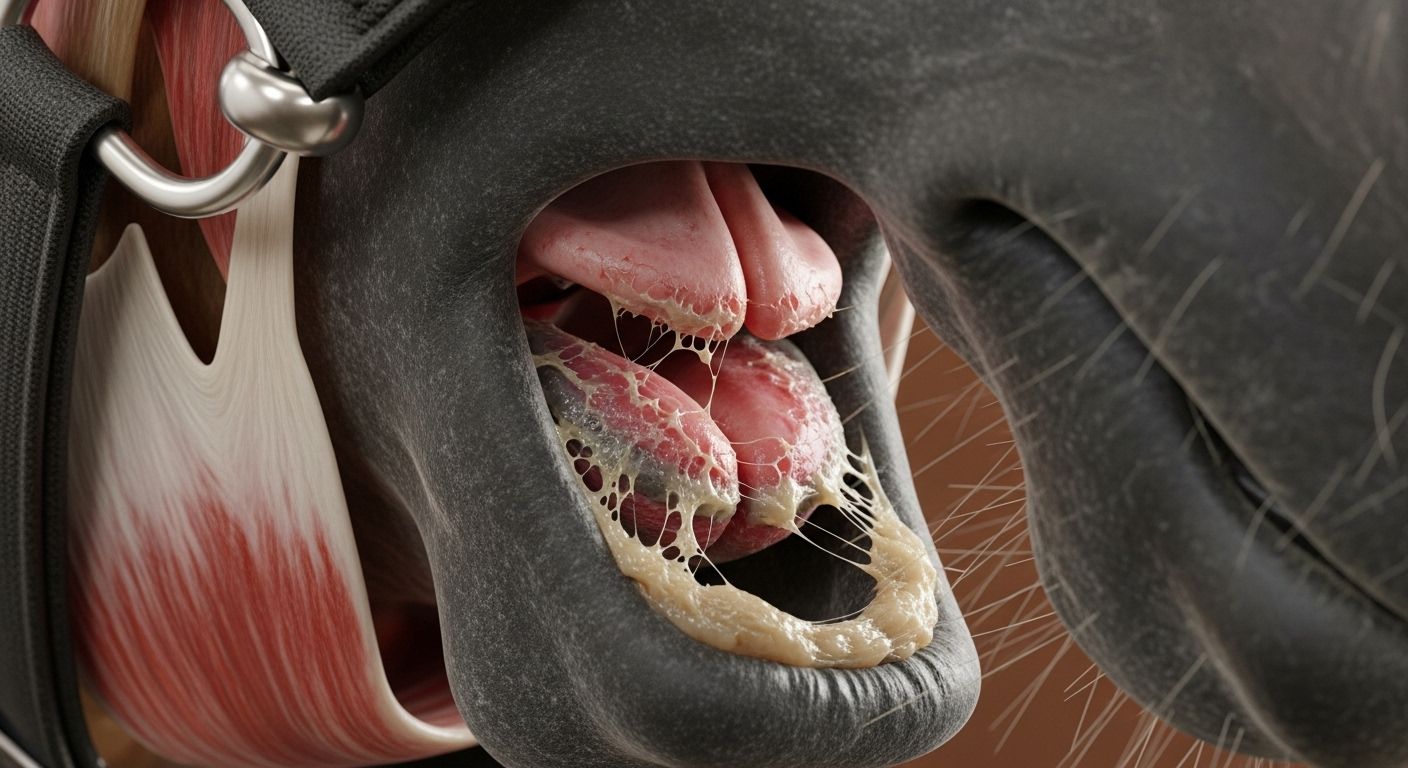
Rare, but *nasty*. Tumours (e.g., squamous cell carcinoma), cysts, or granulomas can physically obstruct or distort the vocal folds. Even small growths—5mm!—can muffle sound. Then there’s bilateral laryngeal paralysis (both sides down), often from trauma or neurological disease (EPM, rabies—*urgent*). These horses may:
- Whinny silently, jaw flapping but no sound
- Make a faint, high-pitched squeak
- Panic on exertion (can’t move air)
Neurological Gremlins: Nerves Gone Walkabout
The vagus and recurrent laryngeal nerves run *from brainstem to larynx*—a 2-metre detour past the heart (left side) and base of the skull. Any pinch, inflammation, or demyelination disrupts signal. Causes?
- Guttural pouch mycosis (fungal erosion of nerves)
- Equine Protozoal Myeloencephalitis (EPM)
- Cervical vertebral stenotic myelopathy (Wobbler’s)
- Botulism (flaccid paralysis—voice *and* tongue gone)
Red Flags: When a Hoarse Voice Means Trouble (and Not Just Hay Dust)
Not every raspy snort is doom—but some are urgent. Watch for these red flags in causes of horse voice:
| Sign | Possible Cause | Urgency |
|---|---|---|
| Sudden voice loss + difficulty swallowing | Guttural pouch infection, botulism | 🚨 EMERGENCY |
| Harsh noise *only* during exercise | Laryngeal hemiplegia | ⚠️ Urgent (performance/safety) |
| Hoarse voice + fever + cough | Viral laryngitis | 🟡 Monitor, vet if >48h |
| Progressive quietness + weight loss | Tumour, chronic neuropathy | 🟠 Investigate ASAP |
And no—“He’s just grumpy” isn’t a diagnosis. Horses are stoic, yes—but evolution didn’t give them vocal cords for *decor*. If the voice changes, *something* changed first.
Myth-Busting: “He’s Fine—I Can Still Hear Him!” (Spoiler: You Might Not Be Hearing *Right*)
❌ Myth: “If he can neigh, his airway’s fine.” ✅ Truth: Mild laryngeal paresis may only affect *high-intensity* airflow. He’ll whinny softly but gasp at canter.
❌ Myth: “Silent horses are just calm.” ✅ Truth: Aphonia = red flag. Even stoic cobs nicker for feed. Total silence? Investigate.
❌ Myth: “Voice changes are age-related.” ✅ Truth: Age *increases risk* (nerve degeneration), but it’s *not* inevitable. A healthy 20-year-old should still greet you like you’ve brought polo mints.
The best tool? Your ears *and* a phone recording. Compare last month’s whinny to now. Subtlety lies in the shift—and causes of horse voice love to hide in plain sound.
What *You* Can Do (Before the Vet Arrives)
While waiting for the vet, avoid:
- Strenuous exercise (could trigger collapse)
- Dusty bedding or hay (inflames further)
- Sweet feeds or molasses (increases mucus)
- Offer soaked hay or haylage
- Steam inhalation (bucket of hot water + towel tent—*supervise!*)
- Record vocalisations + breathing at rest/walk
Want more insights on equine quirks? Pop over to Riding London, explore our ever-growing Learn section, or unwind with our curated list: horse tv shows on netflix must watch series—because sometimes, even vets need a break with *Heartland*.
Frequently Asked Questions
What are the red flags for hoarse voice?
In equine terms, red flags for a hoarse or altered voice include sudden voice loss, difficulty swallowing, nasal discharge, respiratory noise *during exercise*, weight loss, or neurological signs (wobbliness, head tilt). These suggest serious causes of horse voice like guttural pouch infection, laryngeal paralysis, or neurological disease—and require immediate veterinary attention.
What illness starts with a hoarse voice?
Several equine illnesses may present *first* with voice change: viral respiratory infections (e.g., equine influenza), guttural pouch empyema (often from strangles), early laryngeal hemiplegia, or neurological conditions like EPM. A hoarse or diminished whinny can be the earliest—and most overlooked—sign of these conditions, making it a vital clue in diagnosing the true causes of horse voice.
How to get rid of a hoarse voice?
You don’t “get rid” of it—you treat the *underlying cause*. Mild laryngitis may resolve with rest, clean air, and steam inhalation. Bacterial infections need antibiotics and pouch lavage. Roaring may require surgery. Never self-treat; always begin with endoscopic examination. Addressing the root condition—not the symptom—is how you restore healthy vocal function and resolve the real causes of horse voice.
Why have I lost my voice but not sick?
Horses can lose or alter their voice *without* fever or overt illness. Common non-infectious causes of horse voice include low-grade laryngeal inflammation from dust/ammonia, early nerve degeneration (e.g., mild hemiplegia), stress-induced vocal fold oedema, or even a small obstructive mass. Silent progression is real—so “not sick” ≠ “not affected”. A vet scope is the only way to know for sure.
References
- https://www.ncbi.nlm.nih.gov/books/NBK557835/
- https://www.merckvetmanual.com/respiratory-system/laryngeal-diseases/laryngeal-hemiplegia-in-horses
- https://www.rvc.ac.uk/review/guttural-pouch-disease-horses
- https://www.aavs.org/horse-care/health/hoarseness-in-horses-what-it-means